The Greece Behind The Odyssey: From Homer to Christopher Nolan
Christopher Nolan is bringing one of the world’s greatest stories back to the big screen. The Odyssey, inspired by Homer’s ancient epic, follows Odysseus on his legendary journey home after the Trojan War — a story of adventure, discovery and homecoming deeply connected to Greece.
From the Ionian Islands to the Peloponnese and the shores of Thrace, the world of The Odyssey can still inspire a journey through Greece today. Some places belong directly to Homer’s story, others have been associated with it for centuries, and several provided the backdrop for Nolan’s cinematic interpretation.
As The Odyssey returns to the spotlight, discover the Greece behind the myth.
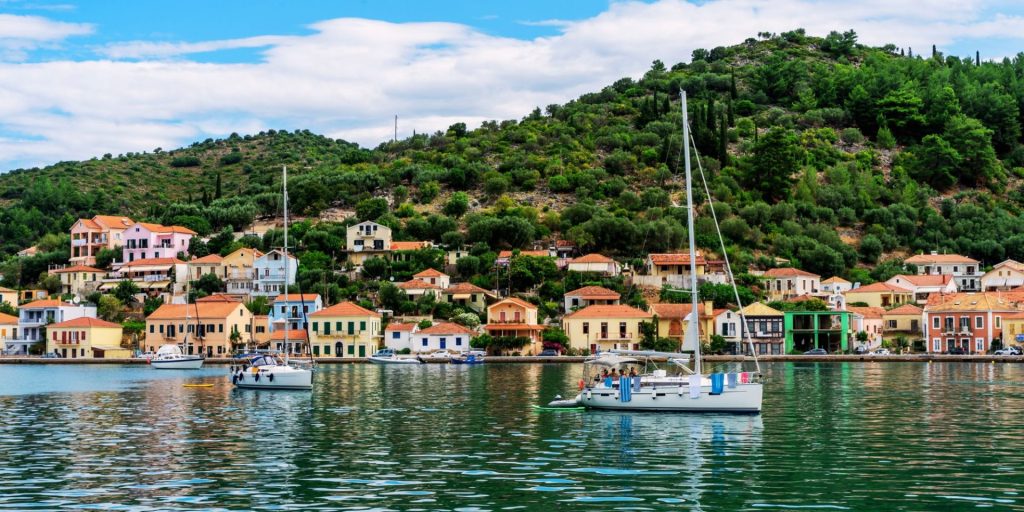
Ithaca: Where Every Journey Leads Home
For Odysseus, Ithaca is more than an island. It is home — and the destination he spends years trying to reach.
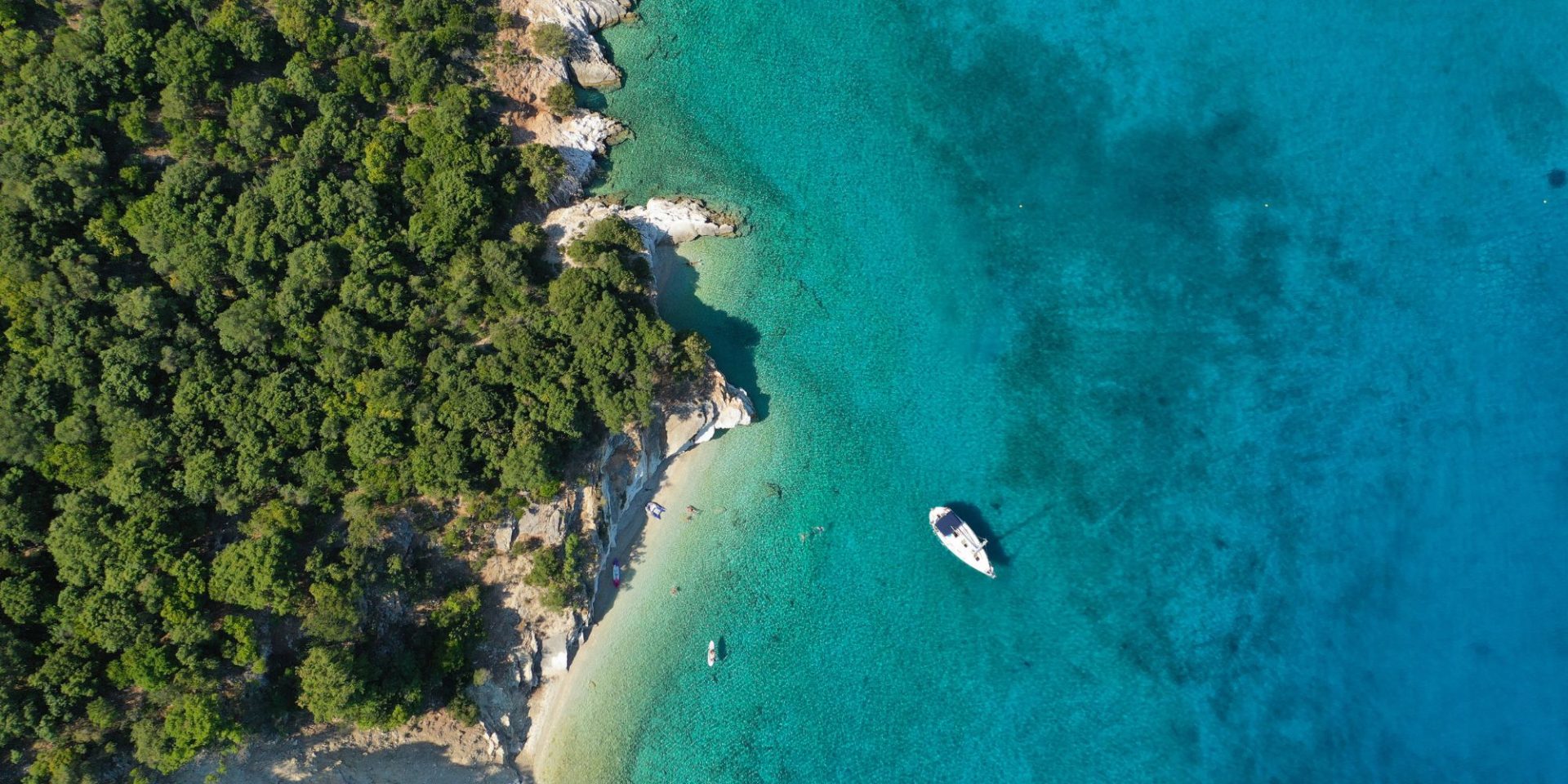
Today, Ithaca remains one of the Ionian Sea’s most peaceful escapes. Green hills, hidden coves, small fishing villages and clear waters create an island that feels wonderfully removed from the crowds. Explore it by private boat, discover secluded beaches and enjoy long seaside lunches overlooking the sea that has inspired storytellers for centuries.
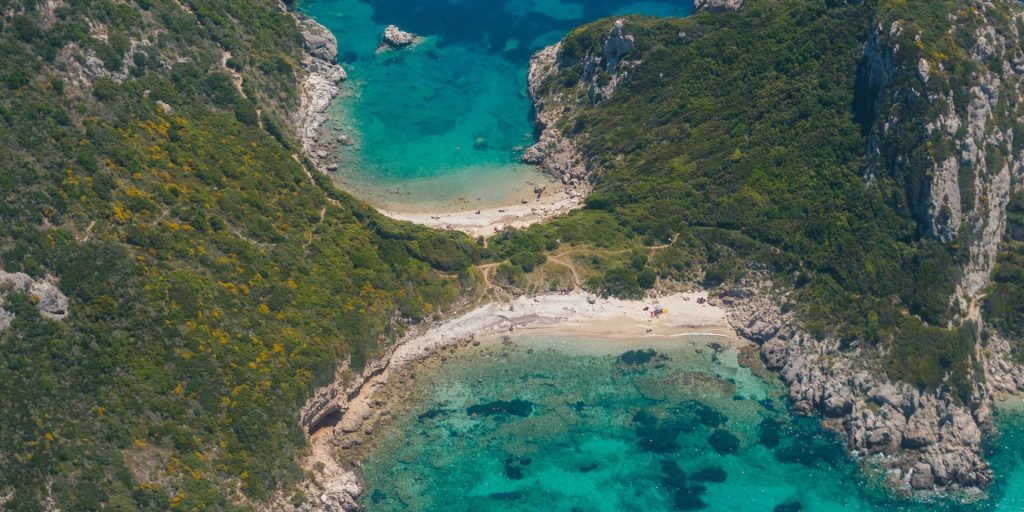
Corfu: In the Footsteps of the Phaeacians
Before finally returning home, Odysseus reaches Scheria, the land of the Phaeacians. It is here that he meets Nausicaa and receives the help that will finally carry him back to Ithaca.
Scheria has long been traditionally associated with Corfu, although its exact Homeric location remains uncertain. The connection adds another layer to an island already rich in stories: elegant architecture, green landscapes, secluded bays and a coastline best explored from the water make Corfu a natural stop on a modern Ionian journey.
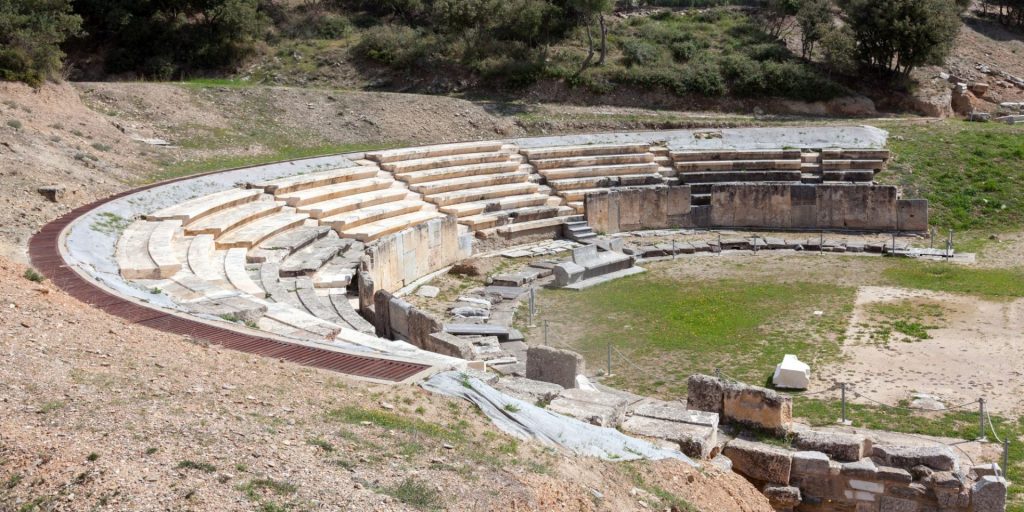
Thrace: Where the Voyage Begins
Soon after leaving Troy, Odysseus and his men arrive at Ismaros, home of the Cicones and one of the first identifiable stops mentioned in his voyage.
Today, the wider landscape of Thrace reveals a less familiar side of Greece. Vineyards, mountains, archaeological sites and an unspoilt coastline create a destination far removed from the classic island experience — and an unexpected starting point for following the story of The Odyssey through Greece.
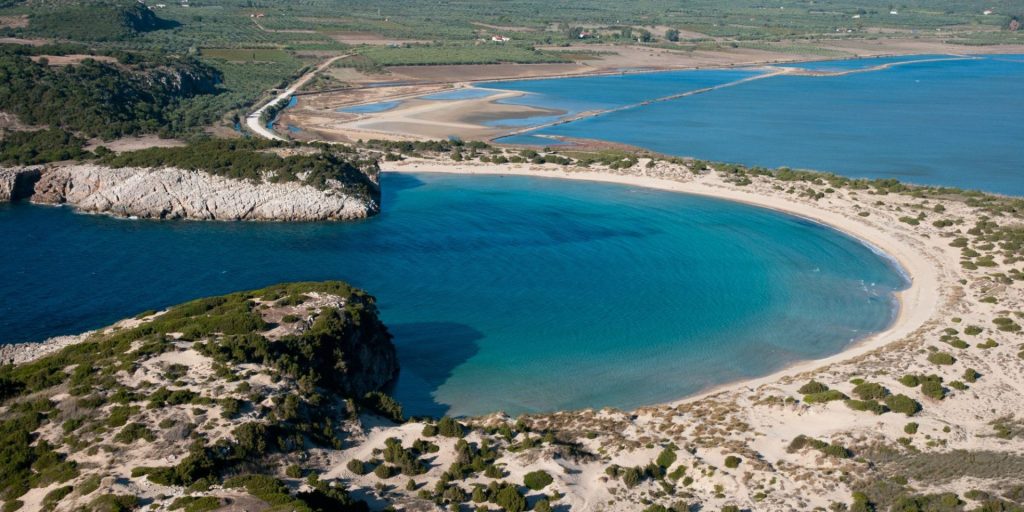
Pylos & Messinia: Following Telemachus
While Odysseus makes his way home, his son Telemachus begins a journey of his own. His search for answers takes him to Pylos, where he meets King Nestor and asks for news of his father.
Modern Messinia combines this ancient connection with one of the Peloponnese’s most beautiful coastal landscapes. Navarino Bay, olive groves and nearby Voidokilia Beach create an ideal setting for days that move easily between culture and the sea.
The region also became part of Nolan’s Odyssey, bringing Homer’s world and contemporary cinema together in the same landscape.
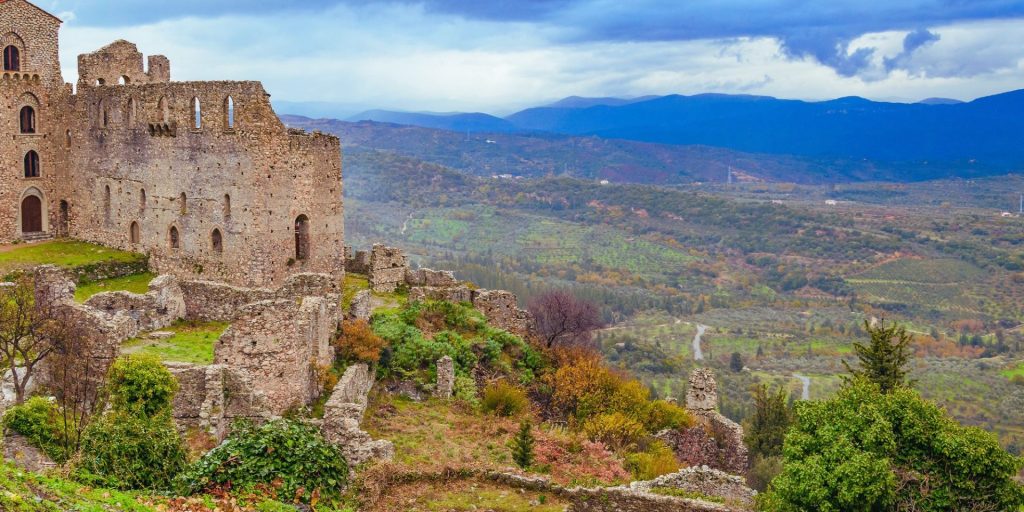
Sparta & Laconia: A Journey for Answers
From Pylos, Telemachus continues to Sparta, where Menelaus and Helen help him piece together the story of what happened after the Trojan War.
Today, Sparta is a gateway to a quieter and often overlooked part of the Peloponnese. Ancient history sits alongside mountain scenery and endless olive groves, while nearby Mystras reveals another side of Greece through its Byzantine palaces, churches and stone paths climbing the hillside.
It is a region that rewards travelers who want to explore beyond Greece’s most familiar routes.
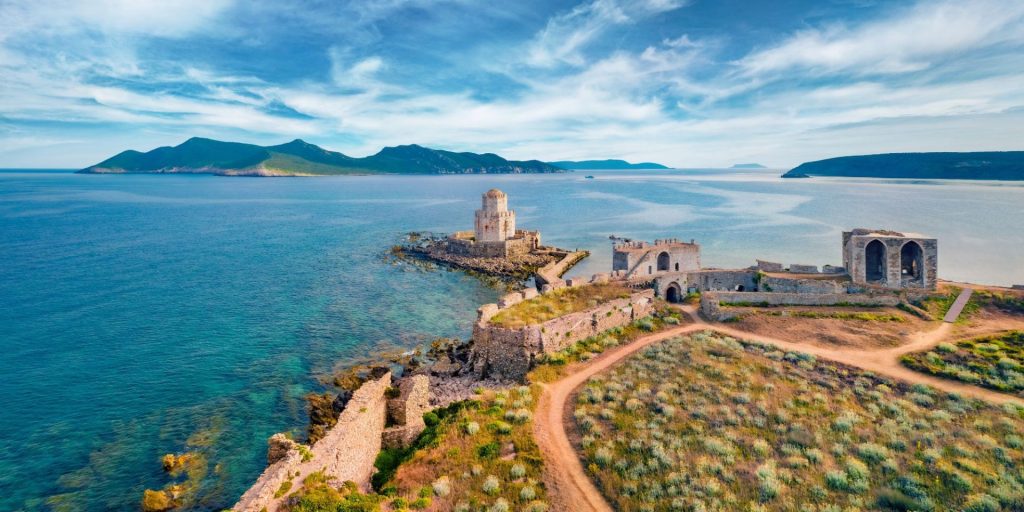
The Peloponnese Through Nolan’s Lens
Nolan’s interpretation adds a new chapter to the connection between The Odyssey and Greece. Beyond Messinia, filming took place across striking locations in the Peloponnese, including Methoni and Acrocorinth, which were transformed into parts of the ancient world for the film.
For travelers, they offer much more than cinematic scenery. Methoni’s imposing Venetian castle rises directly beside the sea, while Acrocorinth overlooks the landscapes of the northeastern Peloponnese from its dramatic hilltop setting.
Together with Pylos and the surrounding coast, they offer another way to experience the landscapes that helped bring The Odyssey back to the screen.
Your Own Odyssey Through Greece
Christopher Nolan may be introducing Homer’s epic to a new cinematic generation, but the places connected to its story have been inspiring travelers for centuries.
A modern Odyssey through Greece can follow those connections from the landscapes of the Peloponnese to Corfu and, finally, Ithaca — combining ancient sites with beautiful coastal stays, local gastronomy, private cultural experiences and days at sea.
Not a recreation of Odysseus’ journey, but a journey inspired by it — shaped around the Greece that exists today.
Let Greek Luxurist create your own Odyssey through Greece, inspired by one of history’s greatest journeys and experienced entirely your way.
The Odyssey in Greece: At a Glance
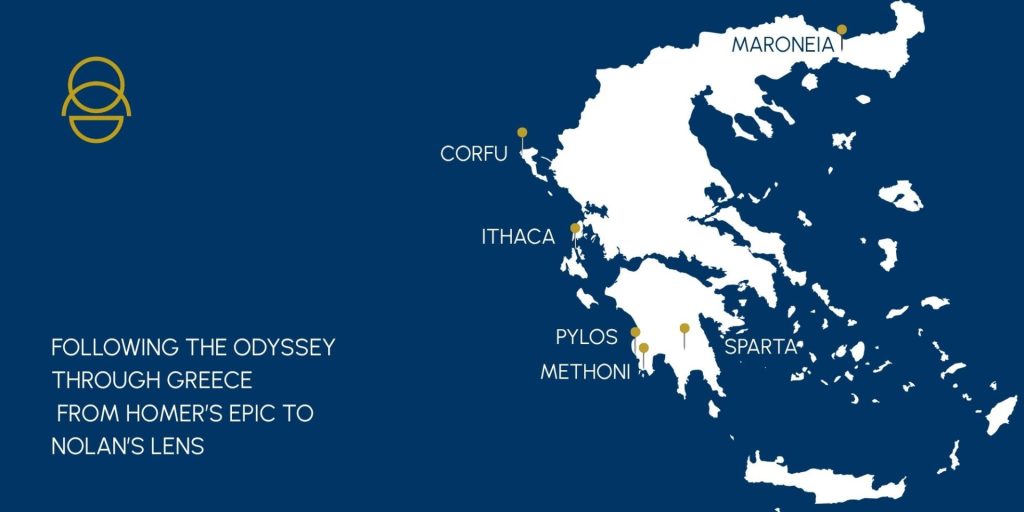
Homer’s Odyssey is closely connected with several destinations in modern-day Greece. Ithaca is the home of Odysseus and the destination of his long journey after the Trojan War. Ismaros, associated with the area of Maroneia in Thrace, is one of his first identifiable stops after leaving Troy. Corfu has traditionally been associated with Scheria, the land of the Phaeacians, although its exact Homeric location remains uncertain.
The epic also follows Telemachus through the Peloponnese. Searching for news of his father, he travels from Ithaca to Pylos to meet King Nestor and then continues to Sparta, where he meets Menelaus and Helen.
Christopher Nolan’s adaptation adds a contemporary cinematic connection. Several scenes were filmed in Greece, particularly in the Peloponnese, with locations including Voidokilia, the wider Messinia region, Methoni and Acrocorinth.
Frequently Asked Questions
Which Greek island is the home of Odysseus?
Ithaca, in the Ionian Islands, is the homeland of Odysseus in Homer’s Odyssey and the destination he spends years trying to reach after the Trojan War.
Which places in Greece are connected to Odysseus’ journey?
Among the clearest Greek connections are Ithaca and Ismaros in ancient Thrace. Corfu has also traditionally been associated with Scheria, the land of the Phaeacians, although this identification is not historically certain.
Where does Telemachus travel in Greece?
Telemachus travels from Ithaca to Pylos, where he meets King Nestor, and then to Sparta, where Menelaus and Helen provide information about Odysseus and the aftermath of the Trojan War.
Where in Greece was Christopher Nolan’s The Odyssey filmed?
Nolan filmed parts of The Odyssey in the Peloponnese. Greek filming locations included areas of Messinia such as Voidokilia, as well as Methoni and Acrocorinth.
Can you plan an Odyssey-inspired trip through Greece?
Yes. An Odyssey-inspired itinerary can combine the Peloponnese with the Ionian Islands, connecting Pylos, Sparta and other historic landscapes with Corfu and Ithaca. The route can include archaeological experiences, private tours, coastal stays and sailing through the Ionian Sea.